01 / OVERVIEW
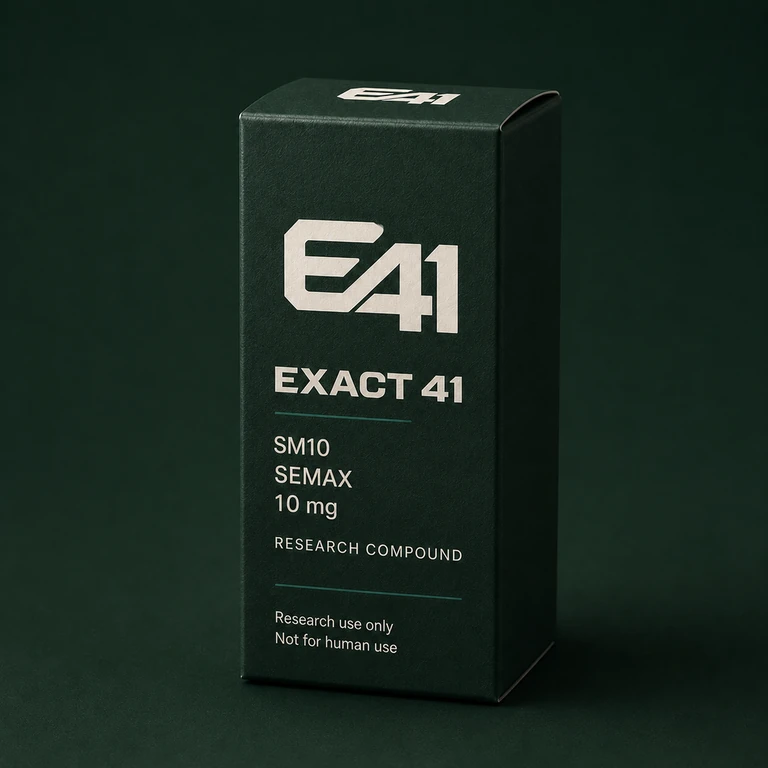
What is Semax?
Semax is a synthetic ACTH-fragment analogue studied in models of brain injury. [1]
02 / RESEARCH AIMS
Why it is studied.
The cited study examined gene regulation after experimental cerebral ischemia in rats, asking how the peptide affects biological responses to reduced blood flow. [1]
03 / RESEARCH MAP
Following the research question.
Researchers observed changes in immune-response and other gene-expression pathways. The molecular explanation remains incomplete; a single proven human pathway is not established here. [1]
04 / OBSERVED EFFECTS
What the evidence shows.
Rat transcriptome findings provide clues about biological responses after injury. They do not show that Semax improves memory in healthy people or establishes stroke-treatment efficacy. [1]
Study context
Animal study
Key distinction
Molecular endpoints
Uncertainty
Human benefit not established here
A selected-source overview, not a systematic review. Research findings are not verified effects of an independently supplied sample.
05 / SAFETY AND LIMITATIONS
Risks belong beside the findings.
FDA notes immunogenicity concerns and limited safety information for proposed administration routes. [2]
This guide reviews a preclinical study, not a comprehensive assessment of all regional clinical use. Species, timing and model differences limit translation.
06 / REFERENCES
Go to the source.
- Semax and immune-response genes after ischemia ↗
Molecular Genetics and Genomics, 2017. Primary rat study.
- FDA — Safety concerns for certain compounded substances ↗
Regulatory safety assessment; route and formulation matter.