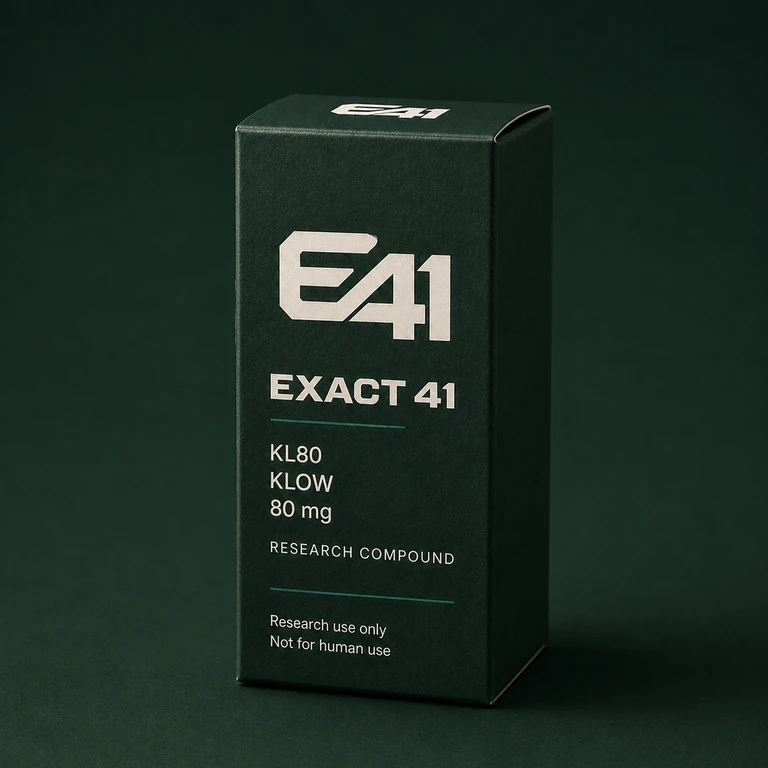
01 / OVERVIEW
What is KLOW?
KLOW is the blend name used in this collection for GHK-Cu, TB-500, BPC-157 and KPV. This composition is catalogue information, not a verified laboratory finding.
02 / RESEARCH AIMS
Why it is studied.
Component research explores topics including tissue repair and inflammation. The key question for a blend is whether the exact combination has been tested; separate ingredient studies cannot answer it. [1]
03 / RESEARCH MAP
Following the research question.
No validated combined mechanism is established by the sources reviewed. Names such as TB-500 also require precise chemical identification before matching a sample to a paper. [1]
04 / OBSERVED EFFECTS
What the evidence shows.
For example, KPV reduced inflammatory measures in cell and mouse colitis models. This is evidence about KPV in those models, not evidence of KLOW efficacy. [1]
Study context
Component studies
Key distinction
No blend trial identified
Uncertainty
Interactions unresolved
A selected-source overview, not a systematic review. Research findings are not verified effects of an independently supplied sample.
05 / SAFETY AND LIMITATIONS
Risks belong beside the findings.
The safety, interactions and stability of this exact combination are not established here. [2]
No controlled study of this exact blend was identified in this review. Do not infer additive benefits or safety from its components.
06 / REFERENCES
Go to the source.
- KPV uptake and intestinal inflammation ↗
Gastroenterology, 2008. Cell and mouse study of one component only.
- FDA — Safety concerns for certain compounded substances ↗
Regulatory safety assessment; route and formulation matter.