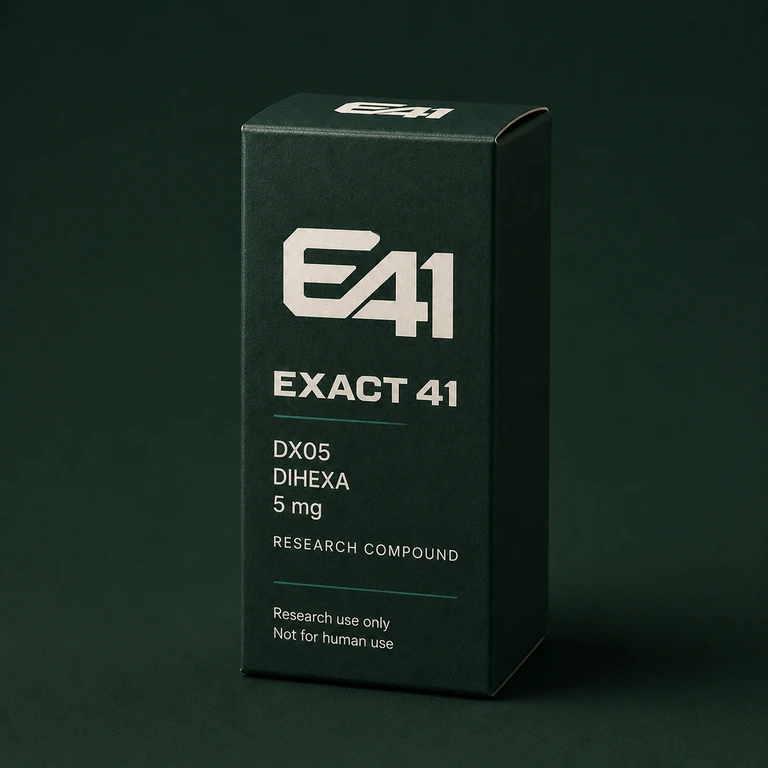
01 / OVERVIEW
What is Dihexa?
Dihexa is an angiotensin-IV-derived experimental compound studied in cellular and animal neuroscience models. [1]
02 / RESEARCH AIMS
Why it is studied.
Researchers investigated synapse formation and cognitive-related models, seeking to understand possible HGF/c-Met signalling effects. [1]
03 / RESEARCH MAP
Following the research question.
The cited study reported binding to hepatocyte growth factor and enhancement of HGF-dependent c-Met activation. This proposed preclinical mechanism comes from a paper with a published expression of concern; it is not established cognitive enhancement in humans. [1]
04 / OBSERVED EFFECTS
What the evidence shows.
The cited paper, which has a published expression of concern, reported changes in synapse-related measures. Such laboratory observations do not establish a treatment for dementia or an improvement in everyday human cognition. [1]
Study context
Cellular / animal models
Key distinction
Mechanistic observations
Uncertainty
Human evidence gap
A selected-source overview, not a systematic review. Research findings are not verified effects of an independently supplied sample.
05 / SAFETY AND LIMITATIONS
Risks belong beside the findings.
FDA reports no identified human exposure data and important unresolved safety questions. [2]
Human efficacy, long-term safety and consequences of altering this growth-factor pathway remain unresolved.
06 / REFERENCES
Go to the source.
- Dihexa and the HGF/c-Met system ↗
Journal of Pharmacology and Experimental Therapeutics, 2014. Preclinical study with a published expression of concern.
- FDA — Safety concerns for certain compounded substances ↗
Regulatory safety assessment; route and formulation matter.
- Notice of concern for the 2014 Dihexa study ↗
Journal of Pharmacology and Experimental Therapeutics, 2021. Read alongside the original paper.